Phase 1 · BuildFixed fee
Build
Discovery to first release
Foundation, scaffold and iteration through production deployment; validation gates; built on the real operation.
Most companies adopt AI and stall in pilots. We absorb it into how your company actually runs.
From the US to LATAM to Europe, across industries: the same operating system absorbs AI into how each company runs.
Four markets, four verticals, one OS pattern.

Operational workflow for public-sector factoring. Pipeline, credit underwriting and tracking unified on an AI-native system, with an ML risk engine learning from every closed operation.
Workflow redesign for four Talent teams. Foundation diagnostic + hands-on build sessions. Output: a working operational tool per team, not a deck of slides.
Visit ↗
AI-enabled acquisition workflow for preschool roll-ups. Sourcing, screening, valuation and IC memos unified into one execution system, with full audit trail.
Visit ↗
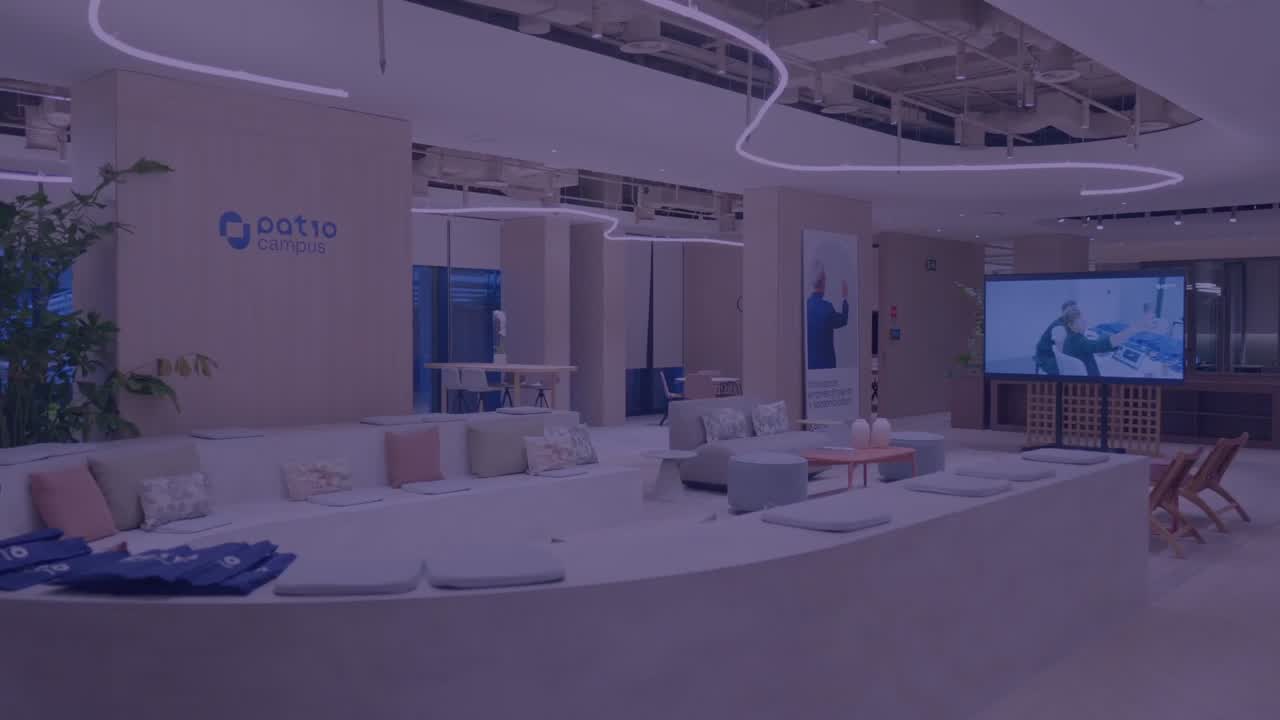
Foundation on a hotel pilot. Process, tech stack and governance from groundbreak to operator hand-off. A replicable blueprint for a multi-asset hospitality master plan.

Co-build partnership. They bring strategy-to-execution muscle, governance and AI adoption programs in sustainability and circular sectors. We bring vertical operating systems and AI-native execution. Joint solutions for clients that need both.
Visit ↗of companies already use AI in at least one business function.
of the world adopted generative AI in 3 years, faster than the PC or the internet.
of leaders capture AI's full value. The rest stay stuck in pilots.
tasks the best agents still fail. Brilliant and unreliable at the same time.
AI is everywhere. The hard part is scaling it to production: real engineering, the part your company can't do alone. That's what we do.
We run the diagnosis in under 5% of the time and cost of a traditional consultancy, and deploy AI in under 10%.
AI is a commodity. The advantage is your operation.
Your operational history: transactions, documents, decisions. The raw material your agents learn from. No competitor has it.
How work actually flows in your company: handoffs, approvals, exceptions. We codify them into workflows agents can run.
The institutional knowledge that lives in your team: criteria, rules of thumb, edge cases. The OS applies it consistently, every time.
Your domain expertise: what good looks like in your industry. It defines where AI executes and where human judgment decides.
Everything in one place. Strategy, business and technology, the whole operation in a single document any leader can read in minutes.
Every conclusion is cited. Each statement links back to its evidence. No opinions, no black box: you can trace where it came from.
It learns on its own. Every new interview, document or conversation regenerates it. The more your company talks, the sharper it gets.
The next 12 months hinge on one bet: launching the new line before the incumbent reacts.
Roughly 20% of the COO's week goes into a single manual task, a clear single point of failure.
Core data lives across three systems that don't talk to each other; reconciliation is still done by hand.
Illustrative · generic example
Operational diagnostic on Foundation, our discovery platform: an AI agent interviews leaders and key teams by voice and ingests your docs, data and APIs. It produces your Company Brain and a blueprint prioritized by ROI, where AI pays off first.
We don't automate your process. We rethink how the work flows: what AI executes and what a human decides, validated with live pilots and demos built in days, not months. Governance defined from the start.
Agents go into production, not pilots. Iterative deployment on the StratumOS platform: integrations, AI execution layer, telemetry, traceability and continuous governance. Value flows from the very first sprint.
Your OS improves every month on its own: better models, new agents and new capabilities arrive continuously, including everything we build for every other client. No migrations, no extra cost.
Your team works in your OS. Behind it, agents do the work and hand back one answer.
Two phases: a fixed-fee build, then a recurring contract to run and evolve it. Value flows from the first sprint.
Accumulated value
Time →Discovery to first release
Foundation, scaffold and iteration through production deployment; validation gates; built on the real operation.
Recurring contract
Your OS never ages: new models, agents and capabilities reach you continuously, at no extra cost.
Your team loses most of its week to friction (searching, reformatting, meetings); AI absorbs it so they focus on judgment, analysis and decisions.
We don't replace your team. We give back their time for what truly matters.
USA · LATAM · Europe. Impact is measured by client, not by features. These are the orders of magnitude we pursue with each one.
End-to-end acquisition cycle for a US PE roll-up of preschools, sourcing, screening, valuation, IC memos and close, with the firm's investment criteria codified into the platform.
Operational workflow for factoring Colombian public-sector contracts. Not traditional credit, at the core, an ML risk engine that learns from every operation, with commercial pipeline and ops tracking on top.
Foundation diagnostic mapping four Talent teams, followed by a hands-on workshop where solutions are built together with each team, not generic AI-101 in slides.
Vetta turns Colombian public-sector contracts into immediate liquidity. Not traditional credit: an AI-native risk engine that learns from every operation, with the commercial pipeline and operations on one system.
As a venture partner, StratumOS builds and runs the OS behind it.
Tell us which processes consume the most time and we'll come back with an initial diagnostic.
Prefer WhatsApp? Message us. No deck required.




Operators who have run these transformations from the inside.